

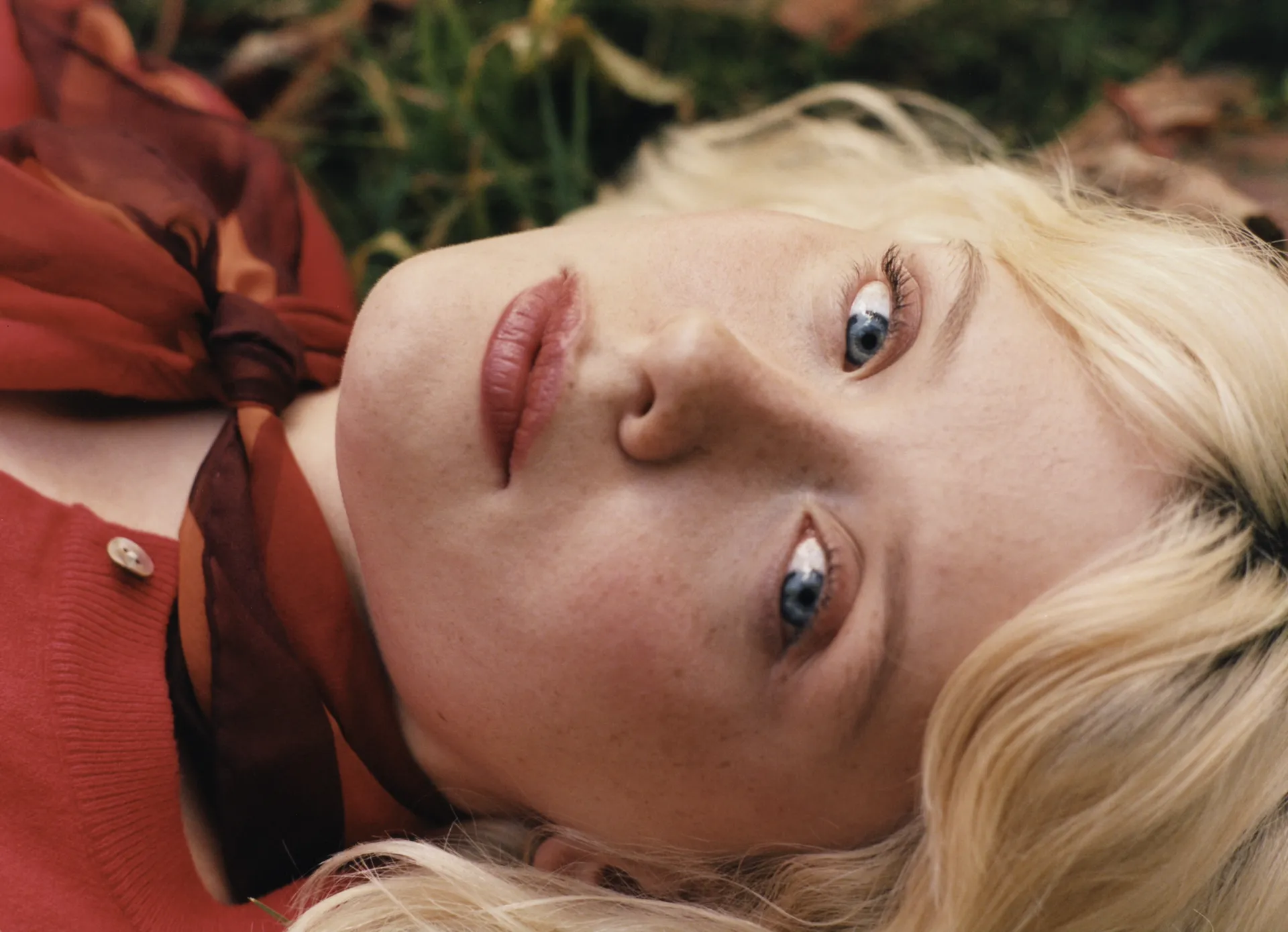
Maisie Peters has always felt like the kind of artist destined to build an intensely loyal fanbase. Opening for Taylor Swift back in 2024 certainly did not hurt, introducing her to an audience that loves confessional songwriting, hyper-specific storytelling, and lyrics that immediately become Instagram captions. But anyone who has followed Maisie beyond the Eras Tour orbit already knows that sharp writing has always been her superpower.
On her newest album, Florescence, the follow-up to 2023’s The Good Witch, she proves again that first and foremost she is a songwriter. Though Maisie is unmistakably British, parts of this album actually reminded me of a Kacey Musgraves record. There are folk and country-leaning moments woven throughout, and compared to some of her past projects, you do not feel that distinctly British sensibility as strongly here. Instead, Florescence feels a little wider and more expansive in its influences. Like The Good Witch, it clocks in at fifteen tracks, and honestly, there is something very “Maisie” about refusing to hold back ideas. She writes like someone with too much to say, and thankfully for listeners, she says all of it.
What makes Florescence interesting is that despite its size, it still feels centered. Maisie leans heavily into metaphor throughout the album, but the wide range of collaborators and sounds keeps it from feeling repetitive. There are folk moments, country-adjacent moments, big pop moments, and stripped back singer-songwriter moments. Even with all those moving parts, her lyrics remain the thing holding the entire world together. One of Maisie’s greatest strengths has always been her ability to sprinkle these really fun, hyper-specific lines throughout her songs. Whether they are clever, devastating, slightly absurd, or all three at once, she has a way of dropping a lyric that immediately makes you stop and think, “wait, I need to hear that again.” It is part of what makes listening to her music feel rewarding.
The album opens with “Mary Janes,” immediately throwing listeners into the kind of confessional writing that Maisie fans love. The line, “I hope they represent us when the aliens invade,” is exactly the kind of odd, hyper-specific lyric that somehow lands emotionally. The horns sprinkled through the song add a warmth that keeps it feeling intimate rather than overly polished. “Audrey Hepburn” follows with a softer acoustic and folky feel that creates a really vivid aesthetic picture, before “Say My Name In Your Sleep” arrives and absolutely steals the show.
I love this song. Written with Marcus Mumford, it feels like one of the strongest collaborations on the album. The banjo and strumming rhythm give the song a constant movement, while the idea of wanting someone to still think of you even after things have ended feels painfully relatable. Marcus elevates the track without overpowering it, and the instrumental break is genuinely beautiful. This quickly became one of my favorites.
“Old Fashioned” has one of the strongest hooks on the record and feels tailor-made (hehe) for the Swiftie crowd. Lines like “she thinks you’re so magic” feel like the kind of lyric fans will scream back live. “House,” meanwhile, slows things down and puts Maisie’s writing completely at center stage. Written solely by her, it is one of the most lyrical songs here. Lines about hearing the coffee machine in the kitchen and imagining an entire life that could have existed hit particularly hard because they focus on the small details that make heartbreak feel real.
Then there is “Kingmaker” featuring Julia Michaels, which feels like two lyric queens entering a room together and refusing to leave until every line hits. Their voices move back and forth naturally, and the line “you love a strong woman until it makes you bitter” immediately stood out. This feels like one of those songs where I would do anything to be a fly on the wall in the writing session. It also has that dance around your room energy that makes it impossible not to love.
The second half of the album has some of my favorite surprises. “Vampire Time,” leans into a guitar line that almost feels like it wandered over from a Noah Kahan record, while “My Regards,” one of the singles released ahead of the album, brings in a fun western flavor and includes some of Maisie’s most playful lines. The song arrived alongside a music video featuring Benito Skinner as Maisie’s bodyguard, complete with an iconic dance moment that matches the song’s confidence and charm. Lyrics like “he took me off the market so I took him to the Ritz” make it feel like Maisie’s fully embracing joy and leaning into the fact that she has definitely been hinting on social media that she is in love.
“You You You” ended up being a major standout for me, too. The layered vocals immediately reminded me of “Clear Blue” by Lorde, and while I was initially unsure if any song would fully pull me in, this one really did. Lyrically, it is gorgeous. “I can’t go back and I can’t go home and I can’t go forward” captures a feeling of emotional limbo in a way that feels devastatingly simple.
Not every song landed equally for me. “If You Let Me,” despite bringing Marcus Mumford back, felt less distinct than their earlier collaboration. Their voices worked so naturally together on “Say My Name In Your Sleep” that this one felt a little more expected. Similarly, “Questions” feels fun but familiar in a way that does not quite stand out among the stronger moments.
Still, songs like “Flat Earther,” with its ridiculous but somehow effective “I loved you like a flat earther” concept, remind you why Maisie works so well as a writer. She takes ideas that should not work on paper and somehow turns them into emotionally convincing songs. And by the time the album reaches “Girls’ Just Flying,” “You Then Me Now,” and the closer “Nothing Like Being In Love,” it becomes clear that the story has shifted. We are no longer sitting in heartbreak, we are somewhere after it.
The closing stretch feels triumphant. “You Then Me Now” captures that weirdly satisfying feeling of looking back at someone and realizing you would handle everything differently now because you have grown. Then “Nothing Like Being In Love” closes the record with swelling strings and a sense of finality, almost like Maisie saying, “this is where I am now.”
Florescence works because even as Maisie experiments with collaborators and sounds, she never loses sight of what made people love her in the first place. The metaphors get bigger and the sonic world gets wider, but at the center of everything are her lyrics. What also makes the album feel special is the balance between familiarity and growth. Maisie works with songwriters and collaborators who have been part of her journey from earlier in her career, while also bringing in new voices like Julia Michaels, Marcus Mumford, and Mikky Ekko. It feels like an artist stretching herself creatively without abandoning the foundation that got her here in the first place. Florescence sounds like growth, but it also sounds like Maisie still knowing exactly who she is.
Florescence is out now.
Pingback: The Best Songs Released in May 2026